
Electric vs. Propane vs. Diesel Forklifts: Which Power Source Is Right for Your Operation?
If you’re shopping for a forklift, one of the first questions you’ll hit is the one most buyers underestimate: what should power it? The electric vs. propane vs. diesel forklift decision shapes your fuel costs, your maintenance bills, your indoor air quality, and even the parts of your operation where the forklift can actually go. Pick wrong, and you’ll feel it every day for the next ten years.
In this guide, we’ll walk through the real-world strengths and weaknesses of each power source, how to think about total cost of ownership beyond the sticker price, and the safety and compliance factors that don’t show up in a brochure. Let’s dig in.
Why This Decision Matters More Than People Think
Most forklift buyers focus on capacity, mast height, and price. Power source gets a quick glance – “we’ve always run propane, let’s get propane” – and the decision is made. That’s a mistake, because the power source affects almost everything else.
A diesel forklift can’t safely run inside an enclosed warehouse for very long. An electric forklift can’t handle a muddy outdoor yard without serious compromises. A propane forklift can do both reasonably well, but you’ll pay for tanks every shift. The right choice depends entirely on where the truck will work, how hard it’ll work, and what kind of operation you’re trying to run five years from now.
This is also one of those decisions that’s nearly impossible to reverse without buying a new truck. Once you commit, you’re committed for the working life of that forklift.
A Quick Featured-Snippet Answer
How do you choose between electric, propane, and diesel forklifts? Electric forklifts are best for indoor operations with smooth floors, single-to-double shift schedules, and operations prioritizing low emissions and low operating costs. Propane forklifts work well for mixed indoor-outdoor use, longer shifts without recharging, and operations needing quick refueling. Diesel forklifts are the right choice for heavy outdoor work, rough terrain, and high-capacity lifting where raw power matters most. Total cost of ownership over 5-7 years usually favors electric for indoor-focused operations.
Electric Forklifts: The Quiet Workhorse
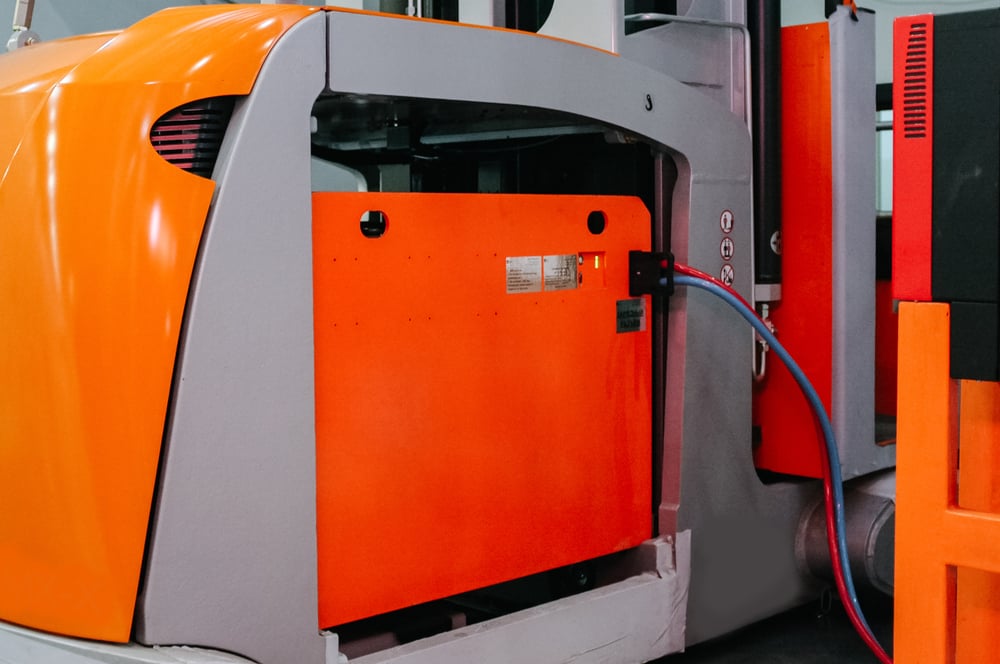
Electric forklifts run on a battery – either lead-acid or lithium-ion – and use an electric motor instead of an internal combustion engine. They’ve gone from a niche option to the default choice for most indoor warehouse operations over the past decade, and for good reason.
The Strengths
Electric forklifts produce zero exhaust emissions, which makes them safe to run indoors without ventilation concerns. They’re dramatically quieter than internal combustion trucks – operators can communicate without yelling, and the warehouse is less stressful overall. Maintenance costs are typically much lower because there’s no engine, no transmission, no exhaust system, no spark plugs, no fuel filters, and far fewer moving parts that wear out.
Energy efficiency is also better. A modern electric forklift converts roughly 90% or more of incoming electricity into useful work, while an internal combustion forklift wastes a significant portion of its fuel energy as heat. According to research published through a U.S. Department of Energy analysis on forklift propulsion systems, even older electric forklift systems delivered useful energy at considerably higher rates than internal combustion alternatives, and that gap has widened with modern lithium-ion technology.
Operating costs are dramatically lower over the long run. Many operations report electric forklifts costing roughly $1,500-$2,000 per year in energy and maintenance for a typical 2,500-hour-per-year duty cycle, compared to $10,000+ per year for propane or diesel equivalents.
The Trade-offs
Upfront cost is higher, especially if you’re going with lithium-ion batteries and modern chargers. You’ll also need charging infrastructure – possibly a dedicated charging area, ventilation for lead-acid batteries, and electrical service capable of handling the load.
Electric trucks struggle with rough terrain, outdoor mud and gravel, and steep grades. They’re also limited by battery runtime – typical lead-acid batteries support roughly one shift before requiring a long charge, though lithium-ion supports opportunity charging during breaks for nearly continuous operation.
For a closer look at how electric trucks fit modern warehouse operations, our electric forklifts lineup covers the full range of capacities and configurations.
Best Fit
Electric forklifts make the most sense for indoor warehouses, distribution centers, food and pharmaceutical operations, retail back-rooms, cold storage, and any environment where emissions and noise matter. They’re also the right call for multi-shift operations once you factor in lithium-ion technology.
Propane Forklifts: The Versatile Middle Ground
Propane forklifts – also called LPG forklifts – run on liquefied petroleum gas stored in a tank that bolts onto the back of the truck. They’ve been the workhorse of mixed indoor-outdoor operations for decades and remain extremely popular for good reasons.
The Strengths
Refueling is fast – swap a tank in two minutes, and the truck is back to work. No long charging windows, no dedicated charging room, no electrical infrastructure required. Propane forklifts also maintain consistent power until the tank is nearly empty, unlike older electric trucks that slow down as the battery discharges.
Propane forklifts can run indoors with proper ventilation, and they handle outdoor work, light grades, and mildly uneven surfaces better than electric trucks. They typically cost less upfront than equivalent electric models, often $15,000-$50,000 new depending on capacity.
For operations that already have propane tank handling infrastructure or a tank exchange program with a local supplier, the logistics are simple. You always have a spare tank, you swap quickly, and you don’t need to plan around battery life.
The Trade-offs
Propane forklifts burn fuel, which means emissions – including carbon monoxide. When properly tuned and used in ventilated spaces, propane forklifts produce significantly less CO than diesel or gasoline equivalents. But “properly tuned and ventilated” matters.
A report from the Washington State Department of Labor & Industries on preventing CO poisoning from forklifts documents how poorly maintained propane forklifts operating in inadequately ventilated indoor spaces have caused serious carbon monoxide poisoning incidents. CO is colorless, odorless, and tasteless – making it dangerous in exactly the way that’s hardest to detect. Operations running propane indoors need consistent engine maintenance, regular emissions testing, and good ventilation.
Fuel costs add up. Propane forklifts typically run $3.25-$4.75 per hour in fuel, plus another $2 per hour in maintenance – meaningfully more than electric over a typical work year.
Best Fit
Propane forklifts work well for mixed indoor-outdoor operations, operations that need fast refueling rather than charging windows, light-to-medium outdoor work, single-shift operations where battery-charging logistics are inconvenient, and facilities that lack the electrical infrastructure for a fleet of electric trucks.
Diesel Forklifts: The Heavy Hitter
Diesel forklifts run on diesel fuel and offer the highest power-to-weight ratio of any forklift type. They’re built for the heaviest work in the toughest environments.
The Strengths
Diesel engines produce enormous torque, which translates to faster acceleration, steeper grade climbing, and higher lifting capacity. For trucks rated 8,000 pounds and above – especially up into the 15,000-55,000 pound heavy-capacity range – diesel is often the only realistic choice.
Fuel cost per hour is often lower than propane, depending on regional fuel prices, and diesel engines tend to be extremely durable when properly maintained. Refueling is fast and the infrastructure (diesel pumps, on-site tanks) is widely available at industrial sites.
Diesel forklifts also handle outdoor terrain – gravel, mud, snow, uneven yards – without compromise. They’re the standard equipment at lumber yards, scrap yards, ports, rail terminals, and any operation moving heavy loads outside.
If you’re looking at heavy outdoor work, our internal combustion forklift lineup includes diesel options for high-capacity lifting and rough terrain.
The Trade-offs
Diesel forklifts emit significant exhaust, including particulates, nitrogen oxides, and carbon monoxide. They generally cannot be used indoors except in extremely well-ventilated spaces, and even then, indoor diesel use is heavily restricted by most workplace safety frameworks.
Noise is substantial. So is vibration, which contributes to operator fatigue over a long shift. Maintenance is more expensive than gasoline or propane, with regular oil changes, fuel filter replacements, DEF (diesel exhaust fluid) for newer trucks meeting current emissions standards, and periodic injector and turbocharger service.
Upfront cost is high – typically $30,000 to $80,000+ depending on capacity. And once you own one, the truck’s outdoor-only nature limits where it can be used.
Best Fit
Diesel forklifts are the right choice for outdoor lumber and scrap yards, ports and rail terminals, construction sites, recycling facilities, heavy-capacity material handling above 10,000 pounds, and any operation where raw power and terrain capability outweigh emissions and noise concerns.
Indoor Air Quality: The Factor Most Buyers Underweight
Here’s a piece of the decision that doesn’t get enough attention. When you’re running an internal combustion forklift indoors, you’re introducing combustion byproducts into the air your employees breathe all day.
The U.S. Environmental Protection Agency’s indoor air quality program maintains extensive guidance on workplace air quality, and the consistent message is that source control – eliminating or reducing emissions at the source – is generally more effective and cheaper than trying to ventilate problems away. For warehouses, that often points toward electric trucks as the cleaner option, especially for operations that spend most of their time indoors.
Even well-tuned propane forklifts emit some carbon monoxide and nitrogen oxides. Diesel emits considerably more, plus particulate matter. In tight indoor environments, in cold months when doors stay closed, or in operations with limited mechanical ventilation, these emissions can accumulate to levels that affect worker health and productivity.
If you’ve ever had employees complain of headaches, dizziness, or fatigue toward the end of shifts in colder months, ventilation around indoor combustion equipment is one of the first places to look. Symptoms like these are classic signs of CO exposure even at levels below what immediately threatens life.
Total Cost of Ownership: Running the Numbers
Most buyers compare sticker prices and stop there. The honest comparison runs over five to seven years and includes:
- Fuel or energy costs at typical regional prices
- Routine maintenance including filters, oil, tune-ups, brake service
- Major repairs as the truck ages
- Battery replacement for electric (typically once during the truck’s life for lead-acid; possibly never for lithium-ion)
- Infrastructure costs – charging stations, propane tank handling, diesel tanks
- Operator productivity including refueling/charging time and any productivity differences in lift speed or acceleration
- Resale value at end of life
When you run those numbers for an indoor warehouse running 2,000-2,500 hours per year, electric typically comes out ahead by a meaningful margin – often $20,000-$40,000 over the life of the truck. For outdoor heavy-duty operations, diesel usually wins. For mixed-use middle-ground operations, propane is often the safest financial choice.
These calculations depend heavily on your local energy prices, your shift schedule, and how hard you work the trucks. A 15-minute conversation with someone who knows your local market can save you significant money on this decision.
A Quick Decision Framework
Here’s how to think about it in practical terms.
Choose electric if: Your forklift will work indoors most of the time on smooth floors. You run one or two shifts per day. You care about emissions, noise, or indoor air quality. You’re willing to invest more upfront for lower operating costs over time. You have or can install adequate electrical infrastructure.
Choose propane if: Your forklift will work both indoors and outdoors. You need quick refueling rather than charging windows. You don’t have electrical infrastructure for a fleet of electric trucks. You’re running single shifts and don’t want to deal with battery management. Outdoor terrain is mild – pavement, dock aprons, light gravel.
Choose diesel if: Your forklift will work outdoors most of the time. You’re lifting heavy loads – typically 8,000 pounds and above. You need raw power for grades, rough terrain, or fast cycle times. Emissions and noise aren’t significant concerns for your operation. You have proper outdoor refueling infrastructure.
The middle ground – say, a busy single-shift warehouse with occasional outdoor work – is where it gets fuzzy, and that’s where talking through your specific situation with a dealer is worth more than another hour of internet research.
Maintenance Differences You Should Know About
Each power source has its own maintenance rhythm:
Electric forklifts need battery care (watering and equalization for lead-acid, less for lithium-ion), occasional motor service, brake maintenance, and tire replacement. That’s most of it. No engine, no transmission, no exhaust.
Propane forklifts need regular tune-ups including spark plugs, ignition components, and emissions tuning to keep CO output low. Oil changes, air filters, fuel filters, and exhaust system inspections are all part of routine service.
Diesel forklifts need everything propane needs, plus DEF refilling on newer emissions-compliant trucks, more frequent oil changes due to combustion byproducts, and periodic injector service. Diesel engines also tend to need more attention to cooling systems and turbochargers.
When something does go wrong, having a relationship with a qualified forklift repair team makes the difference between a half-day of downtime and a multi-day wait. Combustion engines have more failure modes than electric drivetrains, so propane and diesel operations typically benefit more from a preventive service plan.
Wrapping It Up
The electric vs. propane vs. diesel forklift question really comes down to where your truck will work, what it’ll lift, and how you want to run your operation over the next decade. Indoor and emissions-conscious? Electric. Mixed indoor-outdoor with quick refueling? Propane. Outdoor and heavy-duty? Diesel.
The good news is you don’t have to figure it out alone. Our team has helped warehouses across the Southeast and Midwest sort through this exact question, and we’ll give you a straight answer based on your operation rather than a sales pitch. If you want to talk through your situation – including total cost of ownership over a realistic timeframe – reach out to our team. We’re happy to help you make the right call the first time. You can also browse our full forklift sales lineup to see what’s available across power sources and capacities.
Frequently Asked Questions
Can I use a diesel forklift indoors?
Generally, no. Diesel engines emit substantial carbon monoxide, particulate matter, and nitrogen oxides – far more than propane or gasoline. Most workplace safety frameworks effectively prohibit routine indoor diesel forklift operation, and the few exceptions require extensive mechanical ventilation, emissions monitoring, and exhaust treatment systems. Brief indoor trips through a dock door are typically fine; sustained indoor operation is not. If your operation needs an indoor-capable truck, propane or electric is almost always the right choice. Diesel forklifts are best reserved for outdoor work where exhaust dissipates naturally.
How long does a propane tank last on a forklift?
A standard 33-pound forklift propane tank typically lasts 4 to 8 hours of continuous operation, depending on the forklift’s capacity, the type of work, and how heavily it’s loaded. Lighter-duty work in a warehouse might stretch a tank to a full 8-hour shift. Heavy lifting, hill climbing, or hot weather can shorten the runtime significantly. Most operations keep at least one full spare tank per truck so swaps can happen quickly without interrupting work. Operators should be trained on safe tank handling, including proper PPE and verifying connections after each swap.
Are electric forklifts really worth the higher upfront cost?
For indoor operations, almost always yes. The combination of lower energy costs (often 70-80% less than propane or diesel), lower maintenance costs (no engine, transmission, or exhaust), longer equipment lifespan, and elimination of emissions concerns typically makes electric the lowest total cost of ownership over 5-7 years. The break-even point depends on hours of use per year, but operations running 1,500+ hours annually generally recover the higher upfront cost within 3-4 years. For outdoor-only operations or operations needing extreme capacity, the math may favor internal combustion.
What’s the safest forklift fuel type for indoor use?
Electric forklifts are the safest for indoor use because they produce zero exhaust emissions during operation. Propane is the safe second choice when properly tuned, regularly maintained, and used in adequately ventilated spaces. Diesel and gasoline forklifts are generally unsuitable for routine indoor use due to higher emissions of carbon monoxide and particulates. If your facility operates internal combustion forklifts indoors, ensure regular emissions testing, consistent engine maintenance, adequate mechanical ventilation, and consider installing CO monitors as a safety backstop.
Can lithium-ion electric forklifts replace propane in multi-shift operations?
Yes, and increasingly they do. Lithium-ion batteries support opportunity charging – quick top-ups during breaks or shift changes – which means one truck can run nearly continuously without battery swaps. Many operations that historically ran propane for multi-shift work have transitioned to lithium-ion electric because the runtime gap has effectively closed. The remaining advantages of propane are mostly around initial cost and infrastructure: if you already have propane tank handling and lack electrical capacity for chargers, propane may still make sense. But for new installations, lithium-ion electric is usually the better long-term bet for multi-shift indoor operations.
Share This!
Subscribe to Our Newsletter
"*" indicates required fields