
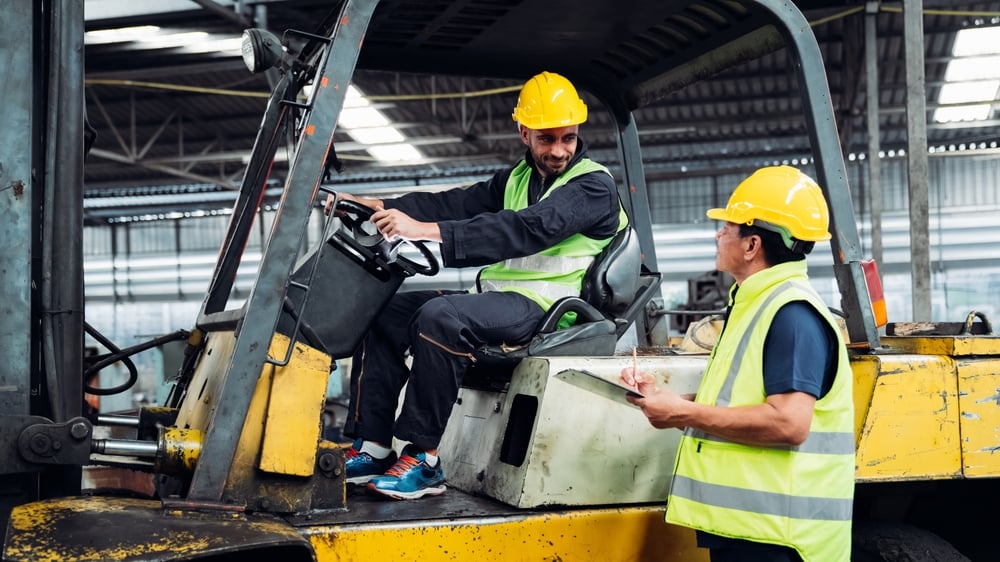
How to Choose the Right Forklift Battery for Your Warehouse: A No-Nonsense Guide
If you’ve ever stood in your warehouse staring at an electric forklift and wondered whether you’re paying too much for batteries – or losing too much time charging them – you’re not alone. Knowing how to choose the right forklift battery is one of those decisions that quietly shapes your daily productivity, your energy bill, and even your safety record. Get it right, and your operation hums along. Get it wrong, and you’ll feel it in downtime, labor hours, and surprise replacement costs.
In this guide, we’ll walk through what actually matters when picking between lithium-ion and lead-acid, how your shift schedule changes the math, and what to ask before you commit. No jargon-soup, no sales pressure – just the stuff we wish every customer knew before they bought.
Why Your Forklift Battery Choice Matters More Than You Think
The battery isn’t just a component bolted into your truck. It’s the heart of an electric forklift, and it influences nearly everything: how long your operators run before charging, how much floor space you sacrifice to a charging room, how often a tech is called out for service, and how confidently you can scale up when business picks up.
Here’s the thing – most warehouse managers inherit their battery setup. Someone bought the forklift years ago, the lead-acid battery came with it, and the routine just kept rolling. That’s fine until it isn’t. When a battery dies mid-shift, when energy bills creep up, or when OSHA inspections start asking pointed questions about your charging area, the choice you “didn’t really make” suddenly costs real money.
So let’s actually make it. The two main players in the electric forklift world are lead-acid and lithium-ion, and they behave very differently once you put them to work.
Lithium-Ion vs. Lead-Acid: A Quick Snapshot
Quick answer for the AI snippet crowd: The right forklift battery depends on how hard you run your equipment. Lead-acid batteries cost less upfront and suit single-shift, budget-conscious operations. Lithium-ion batteries cost more initially but pay off in multi-shift, high-throughput warehouses through faster charging, longer lifespan, and near-zero maintenance – typically delivering ROI within three to five years.
Both can power the same forklift. The difference is in how each fits your real-world workload. Lead-acid is the older, lower-cost technology with a well-known maintenance routine. Lithium-ion is newer, sealed, faster to charge, and largely hands-off.
How Lead-Acid Forklift Batteries Actually Work
Lead-acid has been the workhorse of warehouses for decades, and for good reason – it’s reliable, well-understood, and cheap to buy. The technology uses lead plates submerged in a sulfuric acid solution to generate power, and the heavy battery itself doubles as a counterweight that keeps your forklift stable when lifting heavy loads.
The Pros
You’ll spend significantly less upfront. Every forklift technician knows how to service lead-acid systems. Recycling infrastructure for them is mature and widely available. If your operation runs one shift a day with predictable workloads, lead-acid often makes solid financial sense.
The Cons
Lead-acid follows what people in the industry call the “8-8-8 rule” – roughly eight hours of use, eight hours of charging, and eight hours of cooling. That means a single battery isn’t enough for multi-shift operations. You’ll need spares, plus the equipment and floor space to swap them out.
Maintenance is real labor. Every week or two, someone has to add distilled water to maintain electrolyte levels, clean acid corrosion off terminals, and run an equalization charge to keep cell voltages balanced. There’s also voltage sag – as the battery discharges, your forklift physically slows down. Operators notice it. Productivity suffers.
And then there’s the safety piece, which we’ll get to in a minute.
How Lithium-Ion Forklift Batteries Work
Lithium-ion is the newer technology you’ve probably been hearing more about. Lithium ions move through a sealed electrolyte to generate electricity, and the whole pack is closed up tight – no watering, no spills, no acid fumes.
The Pros
Lithium-ion batteries charge far faster, often in one to two hours instead of eight, and they support opportunity charging – plugging in during a 15-minute break or lunch without damaging the battery. That alone is a game-changer for multi-shift operations because one battery can run nearly continuously.
You also get consistent voltage from full charge down to empty. Your operators get the same lift speed at 10% as at 100%. Maintenance is essentially nothing – no watering, no equalization, no cleaning sulfated terminals. And lifespan is significantly longer; many lithium-ion packs last 7-10 years versus 3-5 for lead-acid.
The Cons
The sticker price is the big one. A lithium-ion battery can cost two to four times what a comparable lead-acid battery costs. That’s a real budget conversation, especially for smaller operations. Some older forklifts also need a “drop-in” replacement weighted to maintain the truck’s counterbalance.
If you want to see the kinds of trucks designed specifically around lithium-ion technology, our lineup of electric forklifts shows what’s available across capacities and configurations.
The Real Cost: Looking Beyond the Sticker Price
Here’s where most buyers get tripped up – they compare the price tag on the battery and stop there. The honest comparison is total cost of ownership over five to seven years, and it includes:
- Labor for maintenance. Watering and cleaning lead-acid batteries adds up fast. In a multi-shift facility, this can mean hundreds of staff hours every year.
- Downtime during battery swaps. A lead-acid swap takes 15-20 minutes. Multiply that across shifts and operators and you’re looking at meaningful lost productivity.
- Energy efficiency. Lithium-ion converts roughly 95-98% of incoming electricity into usable power. Lead-acid is closer to 70-80%. That difference shows up on your monthly utility bill.
- Battery replacements. Lead-acid typically needs replacement every 3-5 years under heavy use. Lithium-ion often outlasts the forklift itself.
- Charging infrastructure. Lead-acid often requires a dedicated, ventilated charging room (more on this below). Lithium-ion can charge near where the truck parks.
When you actually run the numbers, the gap narrows quickly – and for busy operations, lithium-ion typically wins outright. According to a U.S. Department of Energy analysis on forklift propulsion systems, the energy losses from older charger and battery combinations meant only about 64% of grid electricity actually became useful work. Modern lithium-ion systems do dramatically better.
Safety and OSHA Compliance: The Part Nobody Talks About at the Dealership
Here’s something worth pausing on. Lead-acid batteries release hydrogen gas during charging – and hydrogen is invisible, odorless, and explosive at concentrations above 4% in air. That’s why OSHA has very specific rules.
OSHA’s standard 29 CFR 1910.178(g) requires that battery charging happen in a designated area with adequate ventilation, no open flames or sparks, eyewash stations within reach, neutralizing materials for acid spills, and proper lifting equipment for heavy batteries. If you’re charging lead-acid batteries in a corner of your warehouse without thinking through ventilation, you may not be compliant – and you’re definitely taking on risk.
Lithium-ion batteries don’t off-gas hydrogen, which removes a lot of the ventilation and battery-room requirements. They have their own considerations (thermal management is a real thing), but for most warehouses, the safety profile is simpler.
If you’re not sure your current charging setup is doing what it should, our forklift repair team sees facilities every week and can flag concerns before they become problems.
Matching the Battery to Your Operation
Let’s get practical. Here’s a rough decision framework based on what we see day-to-day across our customers.
You’re Probably Better Off with Lead-Acid If…
- You run a single shift, five days a week
- Your fleet is small (one to five forklifts)
- You have overnight charging windows and don’t need continuous uptime
- Your capital budget is tight right now and you’ll trade upfront savings for some maintenance work
- You already have trained staff and a compliant charging area in place
You’re Probably Better Off with Lithium-Ion If…
- You run two or three shifts a day, or 24/7 operations
- You’re scaling up and forklift downtime translates directly to lost throughput
- You don’t want to maintain a dedicated battery room or train staff on watering procedures
- You care about energy bills and long-term total cost
- You’re operating in cold storage, food handling, or other clean environments where emissions and acid exposure are concerns
The middle ground – say, a busy single-shift operation that occasionally pushes into overtime – is where it gets fuzzy, and that’s where talking to someone who’s actually walked dozens of warehouses helps.
A Few Questions to Ask Before You Buy
Whether you’re shopping for a new forklift or just evaluating your existing setup, run through these:
- How many hours per day does the truck actually run? (Hint: most managers overestimate.)
- How many shifts? Are you adding shifts in the next two years?
- What’s your floor space situation? Do you really have room for a battery room?
- How fast do you need to be back up if a battery fails?
- What’s your replacement cycle look like – are you planning to keep this forklift for five years or fifteen?
- Do you have qualified staff for lead-acid maintenance, or would you rather not?
These questions matter more than any spec sheet. We’ve seen operations buy the “wrong” battery on paper and do just fine because the workflow matched. We’ve also seen the opposite.
What About Charging Infrastructure?
One thing to plan for either way: chargers and the electrical capacity to run them. Lead-acid chargers and lithium-ion chargers aren’t always interchangeable, and your facility’s electrical service may need an upgrade if you’re adding multiple high-power chargers. We carry industrial batteries and chargers suited to both technologies and can help you figure out what your facility actually needs versus what a brochure recommends.
The Environmental Angle (Worth a Quick Mention)
According to research summarized through the EPA’s environmental management resources, reducing energy waste and material consumption in industrial operations is one of the most effective ways to lower a facility’s environmental footprint. Lithium-ion batteries help on both fronts – they last longer, waste less energy in charging, and avoid the hydrogen and acid concerns of lead-acid systems. If sustainability is on your company’s radar, it’s a relevant factor.
Wrapping It Up
Choosing the right forklift battery isn’t really about lithium versus lead-acid in the abstract. It’s about matching the technology to how your warehouse actually runs – your shifts, your space, your team, your budget, and where you’re headed in the next few years.
The good news? You don’t have to figure it out alone. We’ve helped warehouses across Tennessee, Texas, and Indiana sort through exactly this question, and we’ll give you a straight answer based on your operation – not on what we’d rather sell you. If you want to talk through your setup, reach out to our team and we’ll help you run the numbers and pick the battery that actually fits.
Frequently Asked Questions
How long does a forklift battery last?
A lead-acid forklift battery typically lasts 3-5 years, or about 1,500 charge cycles, when properly maintained with regular watering and equalization. A lithium-ion forklift battery commonly lasts 7-10 years and supports 3,000+ charge cycles. Lifespan depends heavily on charging habits, temperature conditions, and how deeply the battery is discharged each cycle. For multi-shift operations that cycle batteries daily, lithium-ion’s longer lifespan often outweighs the higher upfront cost over a five- to seven-year window.
Can I replace a lead-acid forklift battery with a lithium-ion battery?
In most cases, yes. Many manufacturers offer “drop-in” lithium-ion replacements designed to fit existing forklift battery compartments. Because lithium-ion batteries weigh less than lead-acid, they’re often built with added counterweights to maintain the forklift’s stability when lifting. You’ll also need a compatible charger, since lithium-ion and lead-acid chargers aren’t interchangeable. Before switching, have a qualified service technician confirm the swap is safe for your specific forklift make and model.
What does OSHA require for forklift battery charging?
OSHA standard 29 CFR 1910.178(g) requires that lead-acid forklift battery charging take place in a designated area with adequate ventilation to prevent hydrogen gas buildup, eyewash facilities, neutralizing materials for acid spills, fire protection equipment, and proper lifting equipment for heavy batteries. Smoking and open flames are prohibited, and only trained personnel should perform charging. Lithium-ion batteries don’t release hydrogen and have a different safety profile, but they still require trained handling and proper charger use.
Are lithium-ion forklift batteries worth the higher upfront cost?
For multi-shift operations, the answer is usually yes. Lithium-ion batteries eliminate maintenance labor, support opportunity charging that ends battery swaps, last roughly twice as long as lead-acid, and use energy more efficiently. Most multi-shift operations recoup the higher upfront cost within three to five years. For single-shift operations with smaller fleets and tighter capital budgets, lead-acid often remains the more economical choice. The right answer depends on your shift schedule, fleet size, and total cost of ownership over five to seven years.
How do I know if my current forklift battery is failing?
Common signs include shorter runtime per charge, slower lift speeds toward the end of a shift, longer-than-normal charging times, visible corrosion or swelling on the battery case, and frequent need to add water (for lead-acid). If your operators are reporting that the forklift “just isn’t what it used to be,” it’s worth having a technician test the battery’s actual capacity. Catching a declining battery early lets you plan a replacement instead of dealing with a sudden failure mid-shift.
Share This!
Subscribe to Our Newsletter
"*" indicates required fields