
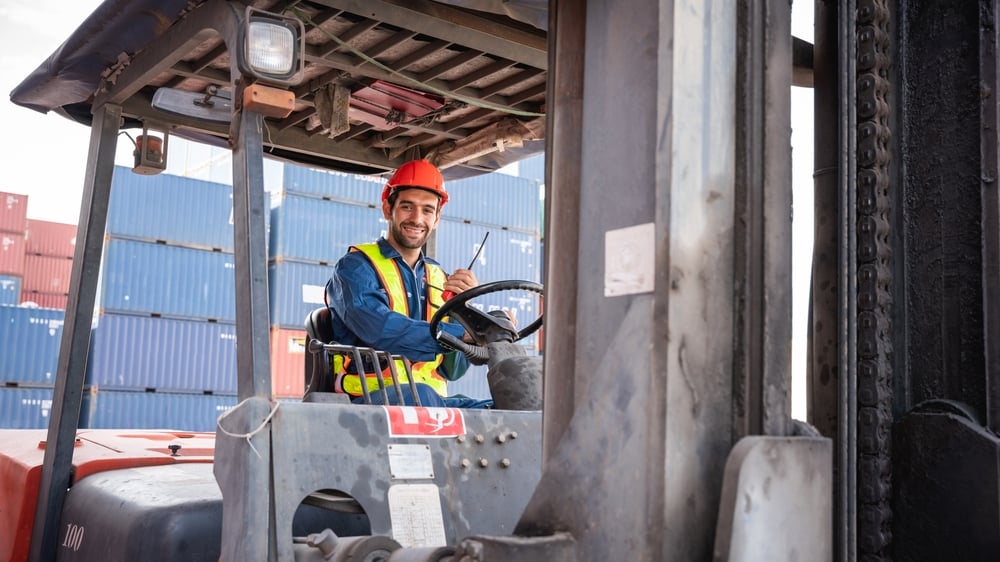
When Is Forklift Refresher Training Required? OSHA’s 5 Triggers Every Warehouse Manager Misses
If you run a warehouse, manufacturing floor, or distribution center, you already know the three-year certification rule. But here’s what trips up a lot of good operations: forklift refresher training isn’t just a calendar event. OSHA actually lists five specific situations that require you to retrain an operator before their three-year certification runs out – and missing any one of them can lead to citations, fines, or worse, a preventable accident.
So when is forklift refresher training required, exactly? In this guide, we’ll walk through OSHA’s five event-based triggers, explain what each one means in plain English, and share how you can build a refresher program that actually works in the real world. Whether you’re managing two forklifts or two hundred, this is the kind of stuff that keeps your team safe and your operation out of trouble.
The Quick Answer: When OSHA Requires Forklift Refresher Training
OSHA requires forklift refresher training under six conditions: (1) the operator is observed driving unsafely, (2) the operator is involved in an accident or near-miss, (3) the operator receives an evaluation showing unsafe operation, (4) the operator is assigned a different type of truck, (5) workplace conditions change in a way that affects safe operation, and (6) at least once every three years as a routine re-evaluation. The first five are event-based and can be triggered at any time. The last one is a calendar requirement that applies to every operator, no matter how clean their record.
That’s the short version. Now let’s break down what each trigger actually means – because the details are where most warehouses get tripped up.
Why Refresher Training Matters More Than You Might Think
Before we dig into the triggers, let’s talk about why this matters. According to the U.S. Bureau of Labor Statistics, 84 workers died in forklift-related incidents in 2024, and forklifts were the source of more than 25,000 nonfatal injuries in 2023-24. The National Institute for Occupational Safety and Health (NIOSH) has long pointed out that most of these incidents are preventable – and that many happen because employers and operators aren’t following the procedures set out in OSHA standards or manufacturer guidelines.
Refresher training is one of the most effective ways to close that gap. It catches bad habits before they become accidents, gets operators up to speed on new equipment or layouts, and keeps your documentation airtight if an inspector ever walks through your door. It’s also, frankly, one of the cheapest pieces of risk management you can invest in.
OSHA’s 5 Event-Based Triggers, Explained
The legal foundation here is OSHA 29 CFR 1910.178(l)(4), which spells out exactly when refresher training and re-evaluation are required. Let’s go through each trigger one by one.
Trigger 1: An Operator Is Observed Operating Unsafely
This one sounds obvious, but it’s the trigger most often overlooked. If a supervisor, safety officer, or even a coworker sees an operator doing something unsafe – speeding around a blind corner, lifting a load that obstructs their view, riding with forks too high, or not wearing a seatbelt – refresher training is required.
“Unsafe operation” doesn’t have to be dramatic. It can be as small as failing to honk at a doorway or skipping a pre-shift inspection. The point is: once that behavior has been observed, the clock starts. You can’t just give the operator a verbal warning and move on. Document the observation, schedule refresher training in the relevant topics, and re-evaluate before they get back behind the wheel for routine work.
Trigger 2: The Operator Was Involved in an Accident or Near-Miss
Here’s where a lot of warehouses get into trouble. Near-misses count. A near-miss is any incident where damage, injury, or worse was almost the outcome – a tire briefly leaving the ground, a load that shifted but didn’t fall, a pedestrian who stepped out of the way at the last second. Per OSHA 1910.178(l)(4)(ii)(B), all of these trigger mandatory refresher training.
A lot of operations only document near-misses informally, or not at all. That’s a mistake on two levels. First, you’re missing data that could prevent the next one. Second, if an OSHA inspector asks for your near-miss log and sees patterns you didn’t act on, you’re going to have a very uncomfortable conversation. Build a simple near-miss reporting system, even if it’s just a clipboard in the break room. Treat each report as a trigger.
Trigger 3: An Evaluation Reveals Unsafe Operation
OSHA requires you to evaluate each forklift operator’s performance at least once every three years – but you can (and should) evaluate more often. If any evaluation, whether it’s the formal three-year one or a more frequent check, reveals that the operator isn’t using proper procedures, refresher training is required.
This is where having clear evaluation criteria really pays off. Use a checklist that covers everything from pre-shift inspections to load handling to pedestrian awareness. If anything fails, that’s your trigger. We talk through how to structure these evaluations in our forklift training program – it’s worth getting the framework right so evaluations actually catch problems rather than just rubber-stamping them.
Trigger 4: The Operator Is Assigned a Different Type of Truck
This is one of the most misunderstood triggers. OSHA isn’t talking about a different brand of forklift – moving an operator from a Toyota to a Hyster of the same class doesn’t require new training. But moving them from a sit-down counterbalance to a stand-up reach truck? Or from an indoor electric to a rough-terrain forklift? That’s a different type, and refresher training in the relevant topics is required.
OSHA actually clarified this in a 1999 interpretation letter: the trigger is the truck’s characteristics, not the manufacturer. If the new lift handles, balances, or operates differently in ways the operator hasn’t been trained on, you owe them refresher training. This often comes up after a new equipment purchase. If you’re upgrading your fleet through forklift sales and bringing in a different class of truck, plan refresher training as part of the rollout – don’t just hand over the keys.
Trigger 5: Workplace Conditions Change
The fifth trigger is the easiest to forget because it’s not about the operator at all – it’s about the environment. If conditions at your facility change in a way that could affect safe operation, refresher training is required. That includes things like:
- New aisle configurations or racking layouts
- A change in load types (heavier, taller, more fragile, etc.)
- New floor surfaces (e.g., transitioning from concrete to a different material)
- New pedestrian traffic patterns or shared workspaces
- Changes in lighting or visibility
- Introducing new attachments like clamps, side-shifters, or rotators
A lot of warehouses redesign their layouts and don’t think to retrain their operators. But if your reach trucks are suddenly navigating narrower aisles, or your operators are now sharing a dock with a new robotics cell, those are workplace condition changes under OSHA’s definition.
The Three-Year Re-Evaluation Rule
On top of the five event-based triggers, every operator must have their performance re-evaluated at least once every three years. This isn’t optional, even for spotless operators. The clock starts from the date of the previous training, not from when you remembered to check. An operator’s certificate doesn’t formally “expire” in the way a driver’s license does, but failing to re-evaluate within three years means they’re no longer in compliance.
The good news: the three-year re-evaluation doesn’t necessarily mean a full retraining course. If the operator demonstrates competence during the evaluation and there’s no other trigger in play, OSHA’s standard is performance-based – you can document the re-evaluation and move on.
How to Build a Refresher Training Program That Actually Works
Knowing the triggers is half the battle. Actually executing on them in a busy operation is the other half. Here’s what we’ve seen work well with the customers we serve out of our Nashville, Cookeville, Fort Worth, and Indianapolis locations.
Document Everything
If it isn’t written down, it didn’t happen – at least not in OSHA’s eyes. Keep records of:
- Every operator’s initial training date and topics covered
- Every evaluation date and result
- Every near-miss, accident, and unsafe-operation observation
- Every refresher training session and what topics it covered
- Any equipment or workplace changes that triggered retraining
A simple spreadsheet works, but dedicated training management software is worth considering once your fleet hits a certain size.
Combine Refresher Training With Equipment Maintenance
Operators often spot mechanical issues before technicians do, and a refresher session is a great time to reinforce pre-shift inspection habits. If a near-miss was partially caused by a mechanical problem, loop your forklift repair records into the refresher conversation. An operator who understands why the lift behaved a certain way is far less likely to repeat the mistake.
Don’t Wait for the Trigger to Become an Accident
The triggers are the legal minimum. The best operations treat refresher training as preventive maintenance for their people. A short, focused refresher every six to twelve months – even just a 30-minute toolbox talk on one specific topic – keeps skills sharp and reinforces a culture where safety is everyone’s job.
Train for Your Specific Workplace
OSHA’s eTool on powered industrial trucks is clear: training has to cover the truck and the workplace. Generic online certification programs are a starting point, but they can’t teach your operators about your specific aisle widths, load types, dock setup, or floor conditions. The practical, on-equipment portion of training has to happen in your facility, with your equipment, under realistic conditions.
Common Mistakes That Lead to OSHA Citations
A few patterns we see again and again:
- Treating “no accidents” as proof of safety. A clean record can mean operators are skilled – or it can mean near-misses aren’t being reported.
- Letting the three-year clock slip. It’s easy to do when you’re busy. Set calendar alerts the moment someone is initially certified.
- Skipping refresher training after equipment changes. A new forklift class or attachment almost always counts as a trigger.
- Relying on a certificate from a previous employer without an in-house evaluation. Even if an operator was trained elsewhere, you need to evaluate them on your equipment in your facility before they operate solo.
- Documenting only the formal classroom hours, not the practical evaluation. OSHA requires both.
Conclusion: Stay Ahead of the Triggers
Refresher training isn’t just a box to check – it’s how you protect your people, your equipment, and your operation from the kinds of incidents that show up in OSHA’s annual citation lists year after year. The five event-based triggers are your early warning system. Pay attention to them, document them, and act on them, and you’ll be in a much stronger position than warehouses that wait until the three-year mark rolls around.
If you’d like a hand setting up a training program that covers OSHA’s requirements and actually fits the way your facility runs day to day, we’d love to help. Reach out anytime through our contact page – we can talk through your fleet, your operators, and what kind of refresher schedule makes sense for you.
Frequently Asked Questions
How often is forklift refresher training required by OSHA?
OSHA requires a formal evaluation of each operator at least once every three years, but refresher training can be triggered at any time before that. The five event-based triggers – observed unsafe operation, accidents or near-misses, evaluations showing unsafe operation, assignment to a different type of truck, and workplace condition changes – can all require refresher training before the three-year mark. In practice, many well-run operations conduct shorter refresher sessions every 6 to 12 months as preventive maintenance for skills.
Does a near-miss really require forklift refresher training?
Yes. Under OSHA 1910.178(l)(4)(ii)(B), any accident or near-miss incident requires refresher training in the relevant topics. A near-miss includes any event that could have caused damage or injury but didn’t, such as a tire briefly leaving the ground, a shifted load that didn’t fall, or a close call with a pedestrian. Many warehouses underreport near-misses, but tracking and acting on them is one of the most effective ways to prevent more serious incidents and stay compliant.
Do I need refresher training if I switch from a Toyota to a Hyster forklift?
Not necessarily. OSHA distinguishes between different types of trucks (like sit-down counterbalance vs. stand-up reach vs. rough-terrain) and different manufacturers. If you’re moving an operator to a different brand of the same type with similar characteristics, refresher training isn’t automatically required. However, if the new truck has different controls, capacity, balance points, or attachments, the operator should be retrained on those specific differences before solo operation.
Who is qualified to deliver forklift refresher training?
Per OSHA 29 CFR 1910.178(l)(2)(iii), trainers must have the knowledge, training, and experience to teach operators and evaluate their competence. There’s no specific OSHA-issued trainer license, but the trainer needs to be able to operate the equipment safely under your workplace conditions and demonstrate effective teaching ability. Many companies use a combination of in-house trainers and outside specialists. If you don’t have a qualified in-house trainer, working with a professional forklift training provider is usually the most efficient path to compliance.
What records do I need to keep for forklift refresher training?
OSHA requires you to certify that each operator has been trained and evaluated, with documentation that includes the operator’s name, the training date, the evaluation date, and the identity of the person who performed the training or evaluation. For refresher training specifically, also document what triggered the session (e.g., near-miss on a specific date, new equipment, layout change) and which topics were covered. Keep these records for the duration of the operator’s employment, and have them readily accessible in case of an OSHA inspection.
Share This!
Subscribe to Our Newsletter
"*" indicates required fields