
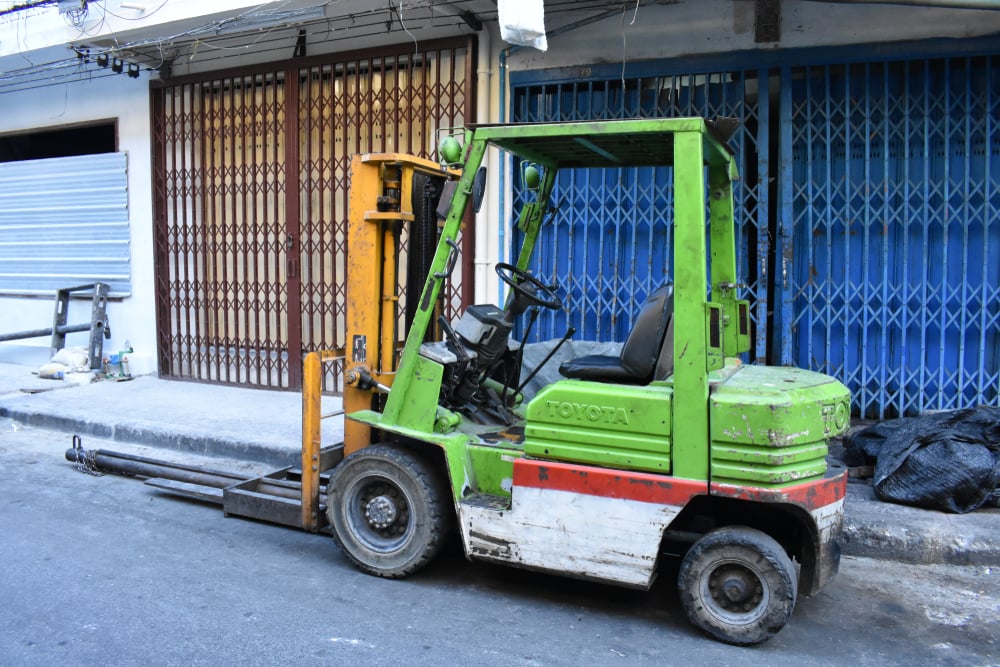
Buying a Used Forklift: A Practical Inspection and Decision Guide
If you’ve been pricing new forklifts and felt that small wave of sticker shock – $25,000 to $80,000 for a serious truck – you’ve probably wondered whether a used forklift could do the same job for half the money. The short answer is yes, often. The longer answer is that buying a used forklift is one of those decisions where knowing what to look for separates the great deals from the expensive mistakes.
In this guide, we’ll walk through what actually matters when you’re inspecting a used forklift, how to read the hour meter without getting fooled, the financial side that buyers often miss (including tax savings), and when to just walk away. No fluff – just the practical version.
Why Used Forklifts Can Be a Great Buy
Forklifts age very differently than cars. A well-maintained forklift can run reliably for 15,000 to 20,000 operating hours – sometimes more – and a truck with 8,000 hours on the meter often has plenty of useful life left. That means the used market is full of equipment that’s been depreciated by its first owner, is mechanically sound, and costs 40-60% less than a comparable new truck.
The upside is real: you get the same lifting capacity, the same productivity, and often the same brand for substantially less money. The downside is also real: you can buy someone else’s problem if you don’t know what to inspect. The trucks that show up on the used market range from “barely used, lightly worked indoor warehouse fleet returns” to “abused outdoor scrap-yard veterans nursed back to running condition.” Telling them apart is the whole skill.
A Quick Featured-Snippet Answer
What should you check when buying a used forklift? Inspect the hour meter, forks, mast and chains, tires, hydraulic system, brakes, steering, lights, horn, seatbelt, and overall fluid leaks. Request full maintenance records, verify the data plate matches the truck, and test-drive it for at least 20-30 minutes under simulated load. Pay closest attention to the forks (look for cracks and wear at the heel), the mast (smooth operation, no jerking), and any signs of leaks underneath. A well-maintained 8,000-hour forklift often outperforms a neglected 3,000-hour one.
Understanding Forklift Hours: The Mileage of the Industry
The hour meter on a forklift is the closest equivalent to a car’s odometer, and reading it correctly is the foundation of any used-buying decision. Here’s how to think about it.
Low hours (under 5,000) – Typically considered a “light-use” truck, often single-shift indoor warehouse work. Premium pricing applies, but you’re buying a lot of remaining life.
Medium hours (5,000-10,000) – The sweet spot for value. Plenty of useful life remains if the truck was maintained, and pricing is much more reasonable than low-hour units.
High hours (10,000-15,000) – A serviceable working truck, often at deep discounts. Inspection becomes much more important at this range. Look for trucks that received consistent maintenance.
Very high hours (15,000+) – Approaching end-of-life for most forklifts. Possible if the price is right and you’re willing to budget for major repairs, but only with thorough inspection.
Here’s the catch: hours alone don’t tell the whole story. A 4,000-hour truck that lifted heavy pallets in a hot foundry has been through more than an 8,000-hour truck that moved light loads in a clean distribution center. Maintenance history matters more than raw hours, and physical wear patterns (seat condition, control wear, paint condition) often reveal more about a truck’s true history than the meter does. Some sellers have been known to reset hour meters, so trust what you see, not just what’s displayed.
The Inspection Process: What to Check, Step by Step
A serious used-forklift inspection takes about 30-45 minutes. Bring a flashlight, wear clothes you don’t mind getting dirty, and follow this sequence.
Step 1: The Walk-Around (Key Off)
Start by walking around the truck without touching anything. Look for:
- Fluid puddles underneath – oil, hydraulic fluid, coolant, or battery acid. Any pooling is a warning sign.
- Body damage – significant dents, cracked welds, or evidence of past collisions (especially around the overhead guard, mast, and frame).
- Tire condition – chunking, cracking, flat spots, or excessive wear. Tires are replaceable, but heavily worn tires hint at how the truck was worked.
- Overall cleanliness – A consistently clean truck usually signals attentive ownership. A truck buried in grime and grease tells a different story.
Step 2: The Forks and Carriage
This is where many used trucks fail inspection. The forks are safety-critical, and damaged forks cause a significant portion of forklift incidents.
- Look for cracks – any visible crack means the fork is unsafe and must be replaced.
- Check the heel – the point where the fork bends from horizontal to vertical. It should be the same thickness as the upright. If it’s worn thin, fork replacement is imminent.
- Look for bends or warping – forks should be straight and even.
- Check for welded repairs – welded forks are a red flag. Per established industry safety standards, forks should never be welded; damaged forks must be replaced.
- Inspect the retaining pins and locks – they should be present, functional, and not corroded.
For more on what proper fork care looks like, our forklift parts team can help identify whether a particular set of forks is serviceable or needs replacement.
Step 3: The Mast and Chains
The mast is what makes a forklift a forklift. Problems here are expensive.
- Mast chains – Look for stretch, rust, missing or damaged links, or kinks. Use a stick (never your hand) to feel chain tension. Chains should be evenly tensioned, well-lubricated, and showing no significant elongation.
- Mast rails – Look for excessive wear, damage, or cracks in the welds.
- Rollers – Should rotate smoothly. Hard spots or grinding sounds during operation are bad signs.
- Hydraulic hoses and fittings – Check for cracks, swelling, weeping, or visible leaks.
When you operate the truck later, the mast should rise smoothly without jerking, drift down slowly under load (if at all), and tilt without binding.
Step 4: The Engine or Powertrain
For internal combustion forklifts:
- Pop the hood and check the engine for leaks, debris buildup, and corroded electrical connections.
- Check fluid levels – oil should look clean, not burnt or sludgy. Coolant should be the right color, not rusty.
- Inspect belts – should be tight, not cracked or frayed.
- For propane – check the tank mounting, hoses, and connections. Sniff for any propane odor.
For electric forklifts:
- Inspect the battery – corrosion at terminals, electrolyte levels (for lead-acid), and case condition. Ask how old the battery is. A truck with a fresh battery is worth substantially more than one with a worn-out one – replacement batteries can run $4,000-$8,000.
- Check cables and connectors for fraying or damage.
- Look at the charger if it’s included.
Step 5: The Operator Compartment
- Seat condition – heavy wear here suggests the truck has been worked hard regardless of what the hour meter says.
- Seatbelt – must be functional and not cut or frayed.
- Pedals and controls – should operate smoothly and return properly.
- Gauges and warning lights – all should function. Anything illuminated that shouldn’t be is a problem.
- Overhead guard – solid, no cracks, no modifications.
- Data plate – should be present, legible, and accurate for the truck. The data plate confirms capacity, attachments, and tire type.
Step 6: The Operational Test
Now start the truck and run it for at least 20-30 minutes:
- Cold start – Does it fire up easily? A truck that struggles to start cold has issues.
- Idle – Smooth or rough? Unusual noises?
- Drive forward and back – Steering smooth? Brakes firm? Backup alarm working?
- Lift and lower – Smooth through the full mast range without jerking or binding.
- Tilt – Both directions without hesitation.
- Side-shift (if equipped) – Smooth operation, no excessive play.
- Test under load – If possible, put a typical load on the forks and operate the truck the way you’d actually use it. Listen for unusual noises and feel for any weakness.
If the seller refuses to let you test the truck under load, walk away. They’re hiding something.
Where to Buy Used: Dealer vs. Private Sale vs. Auction
Used forklifts come from three main channels, each with trade-offs.
Authorized dealers typically offer the safest path. They’ve inspected and reconditioned the trucks, often include limited warranties (30-90 days is common), and provide service support after the sale. You’ll pay a premium for that peace of mind, but for buyers who don’t have technical expertise or a service relationship, it’s usually money well spent. Browsing our forklift sales inventory is a good place to start if you want a dealer-vetted truck.
Private sales can offer the best prices but the highest risk. You’re buying as-is with no warranty and no recourse. Worth considering if you have a knowledgeable technician to inspect the truck – and only then.
Auctions can be tempting but are usually not the right path for first-time used-forklift buyers. Trucks are sold as-is, often without test-driving, and the bidding dynamic can push you past your budget fast. Experienced buyers who know exactly what they’re looking for can find deals at auction; everyone else tends to overpay or buy lemons.
The Financial Side: It’s Not Just the Sticker Price
A used forklift’s true cost includes more than what you pay at purchase. Think about:
- Immediate service costs – Many buyers do a full fluid change, filter replacement, and tune-up immediately after purchase. Budget $300-$1,500 depending on truck type.
- Near-term repairs – Did your inspection turn up items that need attention? A worn set of tires is $1,500-$3,000. A battery replacement on an electric truck is $4,000-$8,000. Build these into your purchase price.
- Operating costs – Energy or fuel, ongoing maintenance, and consumable parts (filters, oil, hoses).
- Downtime risk – Older trucks break down more often. Have a relationship with a forklift repair team ready to go, or have a backup plan.
- Resale value – A well-maintained used truck holds value better than a neglected one. If you plan to resell in 3-5 years, that matters.
When you add it all up, a $15,000 used truck that needs $5,000 of immediate work and $8,000 of repairs over the next two years is really a $28,000 truck. That might still be a great deal compared to a $50,000 new one – or it might not, depending on the alternative.
The Tax Angle Most Buyers Don’t Know About
Here’s something a lot of used forklift buyers miss. Section 179 of the U.S. tax code allows businesses to deduct the full purchase price of qualifying equipment – including used forklifts – in the year it’s placed in service, rather than depreciating it slowly over multiple years.
For 2026, the maximum Section 179 deduction is substantial, with phase-out thresholds that mean most small and mid-sized businesses can deduct their full forklift purchase. According to IRS Topic No. 704 on Depreciation, this deduction is available for qualifying tangible personal property, including forklifts, used more than 50% in your business. The deduction has income limitations and other rules, so working with your accountant is essential.
For comprehensive guidance on how these rules apply to equipment purchases, the IRS publishes detailed instructions in IRS Publication 946, How To Depreciate Property, which is the authoritative source for depreciation strategies. Both new and used equipment generally qualify, which makes Section 179 particularly attractive for businesses buying used trucks – you can often deduct most or all of the purchase price in the same year you buy.
This isn’t tax advice, and rules change. Always consult your tax professional before counting on any specific deduction. But the existence of these provisions can meaningfully change the math on a used purchase, sometimes by thousands of dollars.
When to Walk Away
Not every used forklift deal is a good one. Walk away when:
- The seller won’t share maintenance records. No records often means the truck wasn’t maintained.
- The seller refuses a test under load. Always a red flag.
- The forks have cracks or welded repairs. Safety-critical components must be sound.
- Fluid is pooled under the truck. Significant leaks are expensive to chase down.
- The mast doesn’t operate smoothly. Mast repairs are major.
- The data plate is missing, damaged, or doesn’t match the truck. This creates compliance problems before you even put the truck to work.
- The hour meter seems inconsistent with physical condition – either way. A pristine truck with high hours might be okay; a beat-up truck with low hours probably isn’t.
- The price is suspiciously low. If it seems too good to be true, it almost always is.
When Renting Beats Buying
One last note. If your forklift need is occasional, seasonal, or short-term, renting often beats buying – used or new. A forklift rental gives you the right truck for the project without tying up capital or taking on maintenance responsibility. For peak seasons, special projects, or while you’re deciding whether you really need a permanent truck, rentals frequently make better financial sense than a used purchase.
Wrapping It Up
Buying a used forklift can save you serious money – 40-60% off new pricing – if you know what to look for and know when to walk away. The inspection matters more than the hour meter, the maintenance records matter more than the inspection, and the right dealer relationship matters more than any of them.
If you want help thinking through a used forklift purchase – whether that’s evaluating a specific truck, comparing used vs. new, or just understanding what’s available in your price range – reach out to our team. We’ve helped operations across the Southeast and Midwest find the right used trucks for their work, and we’re happy to give you a straight answer about whether a particular deal is a good one.
Frequently Asked Questions
How many hours is too many on a used forklift?
There’s no universal answer because maintenance quality matters more than raw hours. A well-maintained forklift with 12,000 hours can be a better buy than a neglected one with 4,000 hours. As a general guideline, trucks with under 10,000 hours are considered solid candidates; 10,000-15,000 is reasonable with thorough inspection; and over 15,000 hours requires very careful evaluation and a budget for likely repairs. The most important factors are documented maintenance history, the condition of safety-critical components (forks, mast, brakes), and how the truck was used. Indoor warehouse use is much gentler than outdoor heavy-duty work.
Should I buy a used forklift from a dealer or a private seller?
For most buyers, a dealer is the safer choice. Dealers typically inspect, recondition, and warranty their used trucks, plus they offer post-sale service support. You’ll pay a premium of 15-30% over private-sale prices, but you’re paying for vetting, a warranty, and peace of mind. Private sales can offer better prices but require you to evaluate the truck yourself and accept it as-is with no recourse. Private purchases make sense if you have technical expertise or a trusted mechanic to inspect the truck. For first-time used buyers, dealers are almost always the right call.
Can I deduct a used forklift purchase on my taxes?
Generally yes, through Section 179 of the U.S. tax code, both new and used equipment qualifies for accelerated depreciation when used more than 50% for business. The Section 179 deduction allows you to expense the full cost of a qualifying forklift in the year it’s placed in service, rather than depreciating it over multiple years. There are annual deduction limits, phase-out thresholds, and income limitations that affect how much you can actually deduct. The IRS publishes detailed guidance in Publication 946. Always consult your tax professional before relying on any specific deduction; the rules change frequently.
What’s the lifespan of a typical used forklift?
A well-maintained forklift can run reliably for 15,000-20,000 operating hours – translating to roughly 10-20 years of service depending on how heavily it’s worked. Indoor electric forklifts in light-duty warehouse use often exceed this. Outdoor diesel forklifts in heavy-duty applications typically have shorter useful lives because of the harsher conditions. The single biggest factor is maintenance: consistent service every 200-250 hours dramatically extends a forklift’s life, while neglected trucks rarely make it past 10,000 hours without major repairs. When buying used, you’re partly buying the maintenance history of the previous owner.
How much should I expect to spend on a used forklift?
Used forklift prices vary widely based on capacity, age, hours, and condition. As rough ranges: light-duty electric warehouse trucks (3,000-5,000 lb capacity) might run $8,000-$20,000 used. Medium-duty propane forklifts in the 5,000-6,000 lb range typically run $10,000-$25,000. Heavier-duty diesel trucks or higher-capacity equipment can run $20,000-$60,000+ even used. Add in the costs of immediate service, near-term repairs, and any needed accessories. A truck priced significantly below market is almost always hiding problems, while a top-of-market price doesn’t guarantee quality – it just guarantees you paid too much. Always compare multiple options before committing.
Share This!
Subscribe to Our Newsletter
"*" indicates required fields